
Interested In The Money Max Account?
Schedule Your Free 1 On 1 Cash Flow and Payoff Review Today
Thank You!
Your information has been submitted.
One of our knowledgeable agents will contact you as soon as possible.

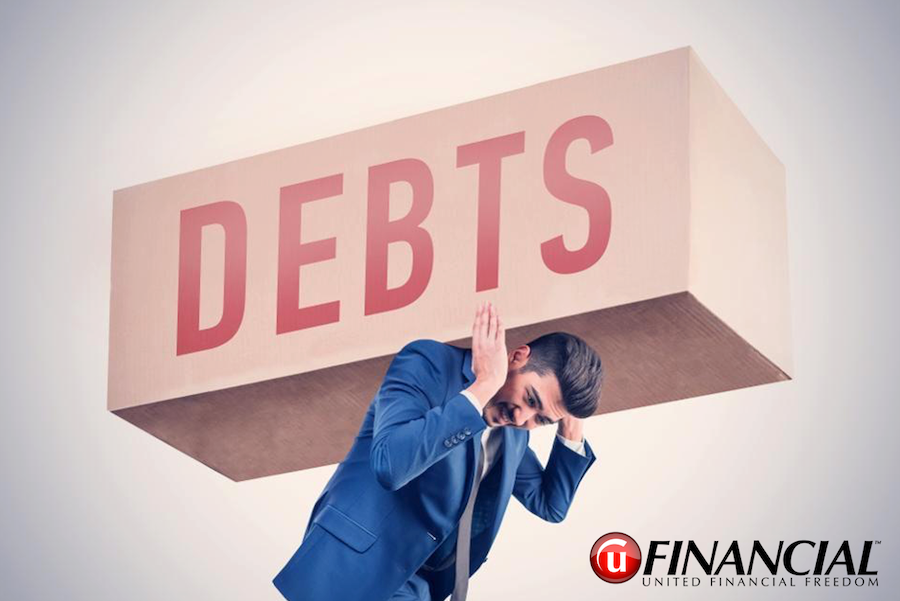
Consumer debt has been in existence ever since people have been able to acquire goods that they couldn’t afford with a promise to pay for the goods at a future date. Some examples of these consumer debts are mortgages, auto loans, student loans, and credit card debts. In fact the first credit card in America was Diners Club, reinforcing the convenience of credit for leisure purposes. (Source)
In recent years, there has been a rapid rise in consumer spending using credit which has resulted in a rapid rise to consumer debt in the United States. Although this increase may appear to be a positive trend from an economic point of view, equivalent to production and consumer spending, However, having a lot of debt is not good for the economy, nor the ordinary consumers in the long run. Carrying a lot of debt puts a lot of financial burden and stress on the average consumers shoulders.
If you are interested in understanding consumer debt and how it is rising in the US, you are on the right page. In this article, you will find some US consumer debt facts that will help you understand its dynamics better, along with a few strategies to help you get out of debt.
Facts about the Rising Consumer Debt in the US
There are 2 main components of consumer debt; closed-end loans and open-end lines of credit.
Closed-end credit is a loan or type of credit where the funds are dispersed in full when the loan closes and must be paid back, including interest and finance charges, by a specific date. The loan may require regular principal and interest payments, or it may require the full payment of principal at maturity. This is a more restrictive vehicle and is also known as non-revolving debt
Open-end credit is a preapproved line of credit between a financial institution and the borrower that may be used repeatedly up to a certain limit and can subsequently be paid back prior to payments coming due. The pre-approved amount will be set out in the agreement between the lender and the borrower. This is a much more flexible vehicle and is also known as revolving debt.
Now that you know that, it will be easier to get the context of the following facts:
Fact #1: 2020 Consumer Debt is Higher than During the 2008 Financial Crisis
US consumer debt ballooned to $14.3 trillion in the first quarter of 2020 despite a decline in credit debt. This is over $1.6 trillion more than what was recorded during the financial crisis of 2008, where the nominal high was only at $12.7 trillion. (Source)
Fact #2: Credit Card Debt is a Huge Factor in the Rising Consumer Debt in the US
One reason why consumer debt is rapidly increasing in the US is because of the Bankruptcy Protection Act of 2005. This made it more difficult for people to file for bankruptcy, so many of them use credit cards to cope with their bills.
As a result, the credit card debt in the early 2nd quarter of 2008 was at $1 trillion, and it has been slowly increasing since. But, in the 2nd quarter of 2011, the credit card debt fell to $832.5 billion. (Source)
Fact #3: Taking Advantage of Lower Auto Loans Rates
Another reason why there is an increase in consumer debt in the US is that more people are taking advantage of lower loan rates. This is the result of the Federal Reserve's expansive monetary policy that lowered the rates in 2008 to help cope with the recession. In 2020, the Federal Reserve is doing the same thing as Covid-19 is triggering another recession. (Source)
Fact #4: Student Loan Accessibility is Also a Factor
When the Affordable Care Act was allowed in 2010, the federal government could oversee the student loan program. They eliminated the middleman and cut costs, and increased the accessibility of education assistance. As a result, student loans accounted for 62% of the non-revolving overall consumer debt in 2008. As of 2020, the figure is boosted to 76%. (Source)
Strategy that Will Help Eliminate Consumer Debt
United Financial Freedom
A very effective debt elimination strategy that you might want to consider is United Financial Freedom or UFF. This is a financial management and debt elimination program that enables you to access banking strategies and knowledge to improve your financial situation.
Importance of Getting Out of Debt
Paying off debt will require plenty of hard work and motivation. This is why you need to remember the reasons why getting out of debt is important. Here are some of those reasons:
Improve Financial Security
Having a lot of debt is a serious threat to your financial security because you are earning money, but you will end up using what you earn for repayments. The money you use for repayment can help you build an emergency fund or acquire assets to attain financial stability.
Reduce Stress
Debt does not only affect an individual financially but also mentally. Constantly thinking about upcoming deadlines and how to make ends meet will definitely result in sleepless nights and stress.
Get a Better Credit Score
A good credit score is a sign that you are a good borrower. It provides lenders the confidence that you will follow terms and make repayments for whatever loan it is that you are applying for.
However, suppose you have a lot of debts. In that case, it can significantly affect your credit score rate, especially when these debts are not paid on time.
Increase Potential Income
Debt is basically using money that you have not yet earned. For example, if you charged $100 to your credit card, that money will need to come from your future earnings, hence reducing your potential income. When you are debt-free, you increase your potential revenue, and you have less worries.
Takeaway
Without a doubt, consumer debt in the US is rapidly rising. There are a couple of factors behind this: more people wanting to get an education, credit cards becoming more accessible, and other economic phenomena such as recessions or financial crises.
By using certain strategies and with access to the financial strategies provided by United Financial Freedom, you can easily mitigate your debt and save significant interest.
At the end of the day, there are more benefits in being debt-free. Hopefully, the information and strategies mentioned above will help you achieve that.